
I am, as a matter of fact, an American. I was born in the Midwest, spent most of my childhood on the East Coast and a brief stint in the South, arriving on the West Coast in time to turn into teenager. I have lived on the West Coast ever since. As far north as San Francisco and as far south as Long Beach, but coastal. So, Californian-American.
Many American holidays leave me feeling that celebration isn’t really the appropriate response.
Independence Day this year was the 250th anniversary of the signing of the Declaration of Independence, but it also is typically a holiday that celebrates the American Revolution. However you frame that, it was a war.
In grade school in New Jersey, we learned every possible fact about the Revolution. Washington’s troops crossed New Jersey four times during the war, and anything that was not the American Revolution didn’t qualify for the curriculum The famous raid on the barracks at Trenton may be the focus of the country’s longest running elementary school field trip. It feels as if children in NJ have been visiting The Old Barracks Museum with their history teachers since perhaps the War of 1812.
I am simply never at ease with a holiday that celebrates war. Or the military. Or our honored troops. Not that I disrespect anyone who is or has been in the service. I only wish that things had been better for them. A friend of mine who served in Navy shared the joke that it was an acronym for ‘Never Again Volunteer Yourself.’
I recall being both confused and annoyed when I learned in high school that the holiday that I knew of as Veterans Day began as Armistice Day; how did a day commemorating the end of war become a celebration of soldiering? That looked like a real bait and switch. It was in 1954 that the US changed the name and the focus – quite a distance from the end of WWI – and the official reason seems to have been a reach to include all veterans, those returned from WWII. Possibly also to distract from the original point that war is terrible, and humanity should never fight another one. But we just did that.
Then there is Memorial Day; a day for mourning dead soldiers. While that makes more sense, it does reflect back to the ‘war is horrible’ concept, and how tragic these many deaths were. There is, as far as I know, no holiday honoring the many civilians who have been killed in wars. The many, many, many civilians who have been killed.
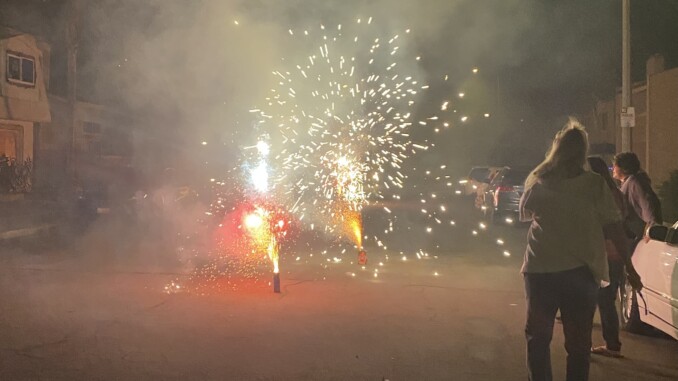
But the 4th of July is Independence Day. It’s not really a celebration of war. Until you hear us all singing the national anthem, the bombs bursting in air. Or the faux artillery attack that goes on all night, illegality notwithstanding.
Obviously, once we signed the Declaration of Independence, we had to fight the battles to hold it up, or it would have been nothing more than an idea. England was not going to allow us to just walk away. But are we celebrating creating a country, or celebrating winning a war?
It’s not just us; there is a holiday celebrated at least once a week, in countries all over the world, called some variation of “Freedom from England.” The fact that we did it first has inspired dozens of others to do it. For some, it wasn’t a war, it was diplomacy that achieved the goal.
In high school, I had a teacher who was sure we had learned all we needed to know about the Revolution, the Civil War, and WWI, he started the class with World War Two, and our end of the year final was on Vietnam. “This is the war you need to know about, right now.”
Some religious holidays are days of contemplation, or reflection. Time taken out of daily life not to cheer but just to think. Perhaps we need a civic holiday to pause and solemnly consider what we are doing and why.
Judith Martin-Straw
