
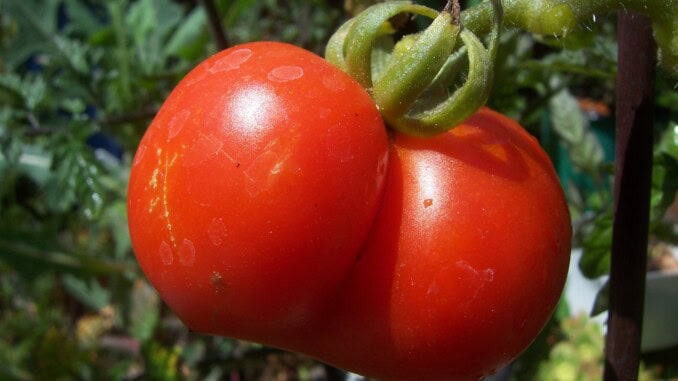
April is around the corner, and for many gardeners that means that it’s time to plant tomatoes. Now is a good time to plant them from seedlings. There are so many to choose from, so let’s talk about what you may want to plant.
History of the Tomato – First, let’s go into the history of tomatoes. Tomatoes have been eaten by humans since the Aztec Empire was around. They were most definitely smaller and often yellow in color, eaten with chili peppers and salt. You may think: wait, that sounds like the beginning of… salsa? That’s right. Then, Europeans took them back to Europe and put them on their metal plates. The plates were made of lead, which leaked into the tomatoes because of their acidity, which gave people lead poisoning. Europeans blamed the tomatoes rather than the cookware, and it took years before they brought the fruit back to their plates. Nowadays we cannot imagine many cuisines without tomatoes.
Veggie or Fruit? Let’s also clarify if tomato is a fruit or a vegetable. The rule is that if the produce is created out of the flower and has a seed in it, it is a fruit. If we eat the root, leaf, or stem of the produce, then it is a vegetable. So yes, tomatoes are fruits.
Heirloom – Now let’s explain what an heirloom tomato is. Heirloom is a produce where its seeds are collected by individual farmers and exchanged with other farmers. They cultivate them for years, and because of that the fruit has a better flavor and they look much more interesting. However, heirloom tomatoes may get sick easier. They also often don’t have a long shelf life. Nevertheless, that is just part of life; sometimes better tasting things may just need a little bit more work.
GMO Free – You may see words like “GMO free” on tomato packaging. So what does that mean, exactly? GMO means Genetically Modified Organisms. This means that the plant’s genetic material DNA has been changed using genetic engineering techniques. That does not sound tasty to me, so I personally avoid GMO produce. A lot of tomatoes will have GMO free labels on it at the nursery.
Hybrid – Hybrid means that a plant was created by cross pollinating two different plants. Those plants are usually called F1 hybrid or cross-bred. An example of that is tulips. That is how we get all those different colors and shapes. Any gardner could take a q-tip and pollinate two different plants to create better fruit. In a garden, squash often cross pollinate themselves naturally with help from bees. So if a squash reseeds itself in the garden, you may get some interesting looking squash the following year. Some plants are easier than others to cross pollinate, so the important takeaway from this is that there is nothing wrong with buying hybrid plants.
Types of Tomatoes – There are a lot of tomatoes, so let’s divide them into the way you would use them: snacking, slicing, and sauce. For snacking, you want something small such as cherry, sungold, pear, and grape tomatoes. I have had very good results with sungold.
For slicing, try Cherokee Purple, Brandywine, Black Krim, and Big Beef tomatoes.
For sauces try San Marzano or Roma tomatoes. Also, the tomatoes I am mentioning will be easy for you to find in any nursery. But if you see some good looking plant, just look up what type of tomatoes it will give you. If you have room for just one tomato, I probably would go with cherry tomatoes, since they allow you to keep on having tomatoes throughout the season. But if you have room for more, you can plant one of each variety and have several sizes.
Are Tomatoes Annual? Annual means it grows for one season, and then it dies at the end of the season. In California, weather makes a lot of things that are normally annual to grow for another season. For that reason, tomatoes can overwinter, meaning that they will produce for the second season. However, the plant would be weaker and more easily get sick. Additionally, tomatoes often have many sicknesses, so I prefer to have a new plant every season. But if you have room, you could grow your tomatoes as long as the plant will produce.
How to Plant Tomatoes? Tomatoes are a bit different when it comes to planting compared to other plants. You start by digging a hole, but you can cover the stem way deeper than other plants. The roots will develop along the stem, as well. You could also have the tomato be planted at an angle, so that the stem will get more roots. Add some compost to the hole as well to benefit the plant. Tomatoes like water, but not on the leaves, so be intentional with your watering.. It likes to grow next to basil, marigold flowers, garlic, onion, borage, and bush beans.
You want to avoid planting them next to brassicas like kale, cabbage, broccoli, and cauliflower. Brassicas complete with tomatoes for space including roots space and the nutrients in a soil. This will cause the plants to be smaller, sound growth, and have less harvest. Nightshades like potatoes and eggplant has similar diseases to tomatoes. Fennel and dill are allelopathic meaning its roots release chemical compost that interferes with other plants growth. Corn competes for nutrients with tomatoes and they share the same diseases.
Where to Buy It? Most nurseries will have a nice selection of tomatoes in Spring. I usually opt to support small mom and pop nurseries in the neighborhood. However, I really like the varieties that Armstrong nurseries carry, since they have a very nice selection. You want a plant that does not have fruit on it yet. It can bloom, but overall a small and strong looking plant is the one you want.
Adding Support – Tomato is a tall plant, so you want a way to support it and help it grow to its fullest potential. There are many tomato cages, which is a metal structure that keeps tomatoes contained. They work great and can be used for many years. You could even use a stick and keep tying the tomato stem to it as it grows, but you have to be consistent, since they grow quickly. You could even grow it on a trellis, but again you will have to manage attaching the plant to the trellis as it grows.
Fertilize – Tomatoes produce a lot of fruit, so it likes fertilizer that will give more nutrients for more fruit. Fish emulsion is a great fertilizer for tomatoes, as it gives the plant a lot of nitrogen boost. Compost enriches soil, plus it provides plenty of good nutrients that slowly seep into the soil. Bone meal is full of phosphorus, which supports strong roots and promotes more harvest. Worm castings are great for root growth and contain soil minerals. I like to add all of these to the garden before planting. You can add fish emulsion two weeks or so, just make sure to dilute it in water and water with it.
Watering– Tomatoes like water. I usually have a drip system set to water 3 times a week during Spring and Summer. One thing that tomatoes hate is getting wet on it its leaves. Set your watering system in a way that the tomato gets water through wet soil only.
Problems – Tomatoes do get a lot of diseases. Usually that happens at the end of the season. As humans like the tomato fruit, so do critters. You may have to put protection over the fruit, like wired bags. Sometimes when things are really bad, I also pick the green tomatoes and have them ripen on a window sill to protect them from bugs. I want to recognize that gardening can sometimes be frustrating; you wait for those tomatoes, and then a squirrel comes and takes a bite, ruining your progress. But on the other hand, there is something truly magical and wonderful about growing your own food. Tomatoes are an easy way of trying your hand at gardening and getting the first bite of something that you grew, even if it may take overcoming a couple of squirrels.
Happy Gardening!
Joanna Kotwis
