
So you got a house and one side of it has a large hill. What do you do with it? What are the problems? How to utilize the space? Let me give you some ideas.
There are few issues here that can happen. One very important one, the soil is eroding. Especially when it is raining, the water pushes the soil down. You also lose some space on a property because of it. So what is the best thing to plant on a hill?
I would focus mostly on holding the soil in place. The one way is to have a retaining wall especially if you do not have much room on the property. Obviously this is an expensive option, and I would only do this if your yard is small. Especially if it is a backyard and without a retaining wall you do not have any backyard space. Additionally I would suggest planting trees and or bushes that can help in holding the rest of the soil in place if there is room for that.
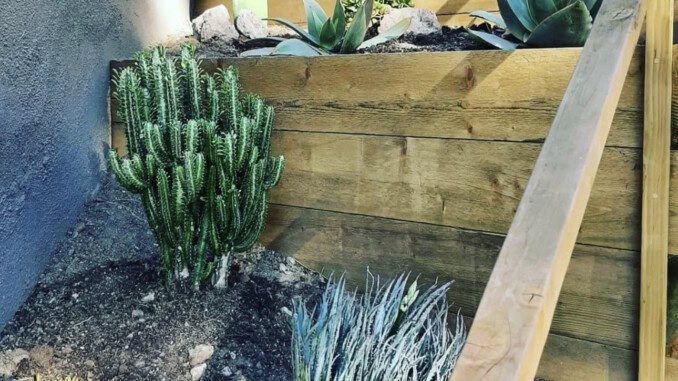
A client I worked with chose to put in several retaining walls to create a veggie garden and have easy access to the backyard with a staircase. Additionally, the other side of the staircase that had no water, I filled in with tough succulents that she also had at the front of the house.
So why should you plant trees and bushes on a hill? It is because of the roots. Roots hold the soil in place. You want to choose plants that are known for having deep roots. It is important to point out that not all plants have deep roots. In Culver City, plants that would have a deep root system would be native plants. Those plants need to survive on rainwater and for that reason they have very deep roots. A lot of those plants are also big bushes so they can fill in the space very fast making this also an affordable option. I think that California lilac, Coyote Brush, California Buckwheat, Deer grass, and Manzanita are great native plants for a hillside. Plus spreading seeds of California Poppies would add beautiful color in Spring when the flower is in bloom. To add texture I would plant some aloes and agaves. Those do not need a lot of water most times, so they can be treated similar to native plants. Their roots are deep and can help in holding the soil as well.
Another great option could be planting fruit trees especially when you do not have room to plant them anywhere else. However, it would be important to have access to actually being able to harvest the fruit. Between the trees I would plant other plants to help in holding the soil and making the area more attractive. Herbs would be a great option in this case. The smell of herbs keeps unwanted bugs away from the fruit trees.
I would avoid just planting one type of ground cover on a hill. I think it looks a bit boring even though it helps with erosion. Adding builders and large logs would look very cool on a hill plus it keeps soil in place as well. I also think that coving the hill side with a sheet of plastic to stop erosion is only a temporary solution.
When planting on a hillside, I would plant on a small ledge so the plants have a little flat area where the water can stay instead of flowing down quickly. Cutting into the hill and creating a little mound on the edge of the space will be a perfect resolution.
If your area on a hill is small, I would suggest planting as much as possible. So the small plants as a group can hold the soil in place. Adding logs and rocks would help you as well. You do not want to have exposed soil. Sometimes the hill area creates a natural river. In this case I would work with nature instead of fighting it. You could put rocks in the river and surround the rest of space with plants.
In conclusion, when dealing with a hill use retaining walls, plants with deep root systems, rocks, logs, and trees. Do not have exposed soil. You want roots to help you to hold everything in place. Be smart about utilizing the space you have and allow nature to help you.
Happy Gardening!
Joanna Kotwis
