
What fruit to plant in partial shade?
Based on this article, you may think I am breaking the garden rule of not following what the label says. However, our California sun is a special one and sometimes things that normally will need full sun, enjoy a little bit of shade. So let’s talk about those edible plants in your Culver City garden that will enjoy a bit of shade.
Our urban gardens are small. Often there is a neighbor with a brand new ADU that adds extra shade to your garden. Or another neighbor that planted a 20′ tree right on the property line that never gets trimmed. Sounds familiar? Plus you may have 1200 sq ft of backyard space that needs to also have a sitting area, bbq, and space for your child to do a cartwheel. Obviously you want a veggie bed, so that gets the sunniest spot. However, what should you choose for the sides of the garden?
Personally I love the idea of fruit trees along the perimeter of the property. You get fruit, some privacy and your neighbors get few fruits as well. However, what if that ADU next door really puts a shadow on your lemon? In that case you can go a different route. Passion fruit is a great option. The plant is a vine, so it does wonderful against a fence. It needs space so one or two plants is plenty for one family. You will get a lot of fruit from one plant. The flower is beautiful and big. The leaves are green and it is overall a very attractive plant. The green leaves are fairly big and not designed to fight a full sun exposure since they are native to South America. So in Culver City you want to plant it in partial shade, on a fence that gets a break from the sun for part of the day. Passion fruit is a heavy feeder, so once a month fertilizer will be beneficial. They enjoy the citrus fertilizer, so while you feed your citrus, stop by the passion fruit as well.
Another great plant for shade areas are blueberries. The plant is a small bush. In California you have very specific varieties that are grown here. In this case it is very important to read the label! A lot of times I see in the nursery or grocery store blueberries for zone 7-9, we are zone 10b. Please let the store know about this, so next year they hopefully correct the mistake. You want blueberries for zone 9-11, that is the most common label you will see. You also need more than one plant, since they cross pollinate. You could also choose different varieties for better results. If the label only has the name of the blueberry, do a quick search to see if it is for our zone. Your best time to plant them will be November to February. But there is one more important thing about them. They love acidic soil, so do not leave the store without it. The plant likes fertilizer in early and late spring. It likes acidic fertilizer as well, so grab something that contains ammonium nitrogen like urea, ammonium sulfate, cottonseed meal. To maintain acidic soil spread some coffee grounds and pine needles. A lot of people plant blueberries in large pots to control the acid soil. I have seen success in both ways.
Mint is another wonderful plant that we cultivate and it can grow in shade. Mint is known for having square shaped stems, once cut. Also in that family belongs basil, oregano, rosemary, and sage. Check out the stems next time you are cooking with those herbs. Mint loves to spread, it goes as far as you will let it. So best to have the plant in a pot. It is overall an easy plant once contained. Plus it keeps bugs away from your house. Just know that there are different types of mint so read the label and pick what you like and how you use it.
Cilantro is another edible plant that will take some partial shade. Those beautiful green leaves burn easily, so little shade throughout the day is what they like. Plus it slows them down from blooming. Cilantro overall is an easy plant, I plant it from seeds in my veggie beds. I leave a few plants to bloom and collect the seeds for next year. However, very often the plant reseeds itself in my garden. I also enjoy the flower of it that is also edible. Plus the bees have a big pollen party when cilantro is in bloom.
If you are growing your veggies in a small space like an elevated table garden, having it set up in a partial shade will be perfect. Since pots of any kind have a more limited amount of soil, they dry out faster. So having them be in a partial shade actually can help. Especially if the containers are sitting on cement and against the wall. Those surfaces reflect the sun making the spot much hotter than we imagine. By partial shade, I mean that throughout the day the spot gets some shade, but also plenty of sun.
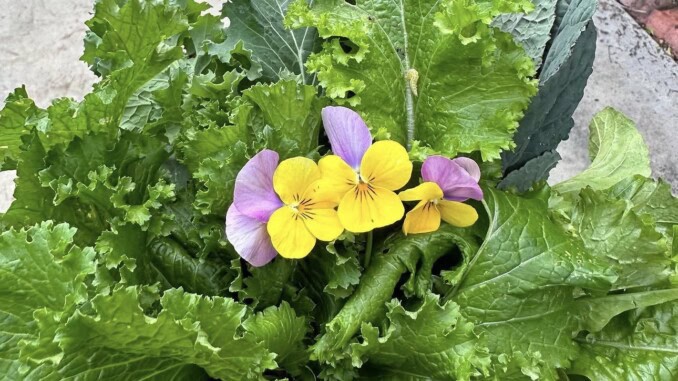
During Fall garden, your leafy greens also like a little shade. They are happy with 3 to 5 hours of sunlight. The leafy greens that can take some shade are lettuce, kale, Swiss chard, spinach, arugula, and mustard greens. The root veggies that you will also grow in fall also do not mind some shade, those are radishes, beets, carrots, and potatoes, which are happy with just 4-5 hours of sun.
Since our urban gardens are limited on space, having a plan and utilizing the space you have for growing food is important. So when you are thinking about using some space in your garden, know that some edible plants can also grow in partial shade. Shady spots can be tricky, but you do have some options even with plants that we enjoy eating.
Not much planting can be done right now. We are coming to the summer season and so I will stop planting in the next few weeks. Best is to wait till October for planting, but that does not mean you cannot plan. So go out there look for some shady spots and see where that blueberry plant can go.
Happy Gardening!
Joanna Kotwis
