
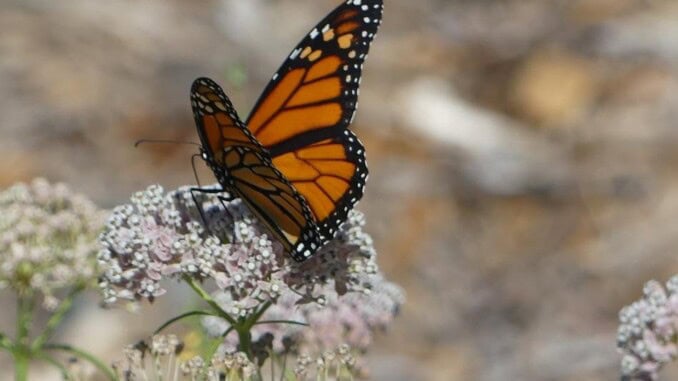
If you lived in California for a minute, you have seen monarch butterflies. Those orange butterflies with black markings, seem to be the most common here, or at least those are the ones that we enjoy a lot. People love them and many plant the species that this butterfly likes. I am here to answer all questions relating to this pretty insect.
First of all, monarchs are super pretty. The color is just so attractive. The monarch we see migrates all the way from Mexico, while they are feasting in other parts of California and west of the Rockies. They travel long distances and go through 3-5 generations of butterflies to make this journey. They only live for 3-10 weeks, basically they hatch, eat, turn into butterflies, lay eggs, and die. Repeat the cycle 3-5 times. The last super generations hibernate in the south, and then makes a long journey back to the north to start the slow descent all over again. So that butterfly that hibernates lives 6-9 months. How incredible is that!
To add to their amazing journey, they only eat milkweed, which is poisonous to a lot of other living things. This is how the butterfly protects itself. If a bird eats it, the bird will get sick because the insect is full of poison. If this is not genius design, I do not know what is.
At one point monarch butterflies were really declining in numbers. This is why people start advocating for planting milkweed to help the little guy. This most definitely helped, but still numbers are significantly lower. However, not every milkweed is the same.
If you go to most nurseries, you will find tropical milkweed, it has orange or yellow flowers, and the leaves are very green. This milkweed needs to be cut back in late October. So get your shears and head to your garden now. If it regrows quickly, cut it back again till March. You want the butterflies to start flying south and not stay here to keep eating. Another problem with this milkweed is that the plant contributes to parasites that very negatively affects the caterpillars. So cutting back the tropical milkweed helps with the parasites as well.
Previously the butterfly had only native to California milkweed available. That milkweed goes dormant at the end of summer. The native milkweed that grows well in our area is called Narrowleaf Milkweed Asclepias fascicularis. This plant naturally dies down in Fall. Let it do its thing, it will be back in Spring to feed the caterpillars. You want to have more than just one plant planted in a full sun. If you have caterpillars in your yard and they ate all your milkweed, you will have to get more milkweed if the insects are young. With adult caterpillars you can feed them with cut cantaloupe, pumpkin, and other squashes. If you have a shady garden, you can plant Showy Milkweed from northern California, that does well here in a little shade.
We cannot forget about butterflies, those insects feed on nectar, yes they are also pollinators! So planting flowers in your garden attracts butterflies. Bob Allan who is an author and expert on many things including monarch butterflies, suggests planting native plants like white yarrow, California Buckweed, common native sunflower, Asters, Verbena de la Mina, Sages: white, black and Cleveland. From not native flowers he suggests planting cosmos, coneflower, blanket flower, and black-eyed Susan.
To summarize this, monarchs are cool, but they need our help. So if you do not have any milkweed buy several plants of the Narrowleaf milkweed or Showy Milkweed, depending on how much sun you get. If you already have tropical milkweed, replace it with native milkweed, or cut it back at the end of October. Do not use pesticides, because that does not help anyone. Plant other flowers to give nectar to the butterflies. Then grab a chair, cup of tea and enjoy this marvelous orange creature that we are lucky to have here.
Happy Gardening!!
Joanna Kotwis
