
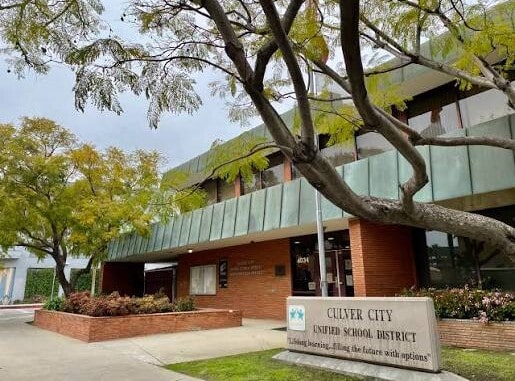
At the October 13, 2026 Culver City Unified School District Board of Education meeting, trustees addressed a range of topics including rising academic achievements, new wellness initiatives and ongoing labor concerns.
President of the Culver City Federation of Teachers Ray Long celebrated recent academic wins across the district. Long highlighted a rising number of high school students enrolling in AP courses and earning passing scores of 3 or higher, a grade that qualifies students for college credit.
However, Long then shifted focus to the financial struggles facing district educators amid rising cost of living. Comparing the current state of teacher compensation and benefits to a crisis, Long delivered a warning to board members, urging them to prioritize competitive benefit packages to ensure the district can maintain qualified teaching staff over the long term.
The board announced that Culver City Middle School and High School and La Ballona Elementary School were officially deemed “textbook sufficient” following an on-site audit by the Los Angeles County Office of Education (LACOE). The annual site visits are conducted under California’s historic Williams Settlement legislation, which requires county education offices to verify that every public school student has equal access to sufficient instructional materials.
In a unanimous vote, the board approved a one-year partnership with Big Smiles California, an in-school mobile dental service provider. Under the agreement, participating CCUSD schools will host an on-site mobile dental facility for the upcoming year, providing students with free preventive dental services.
Educators shared promising early updates regarding Culver City High School’s newly enforced cell phone restriction policy. Aligning with broader statewide efforts to reduce classroom digital distractions, teachers report a noticeable shift in school culture. Social Studies teacher Ms. Jennifer Kochevar shared her observations on how the policy is reshaping student interaction on campus.
“Students are engaging with each other,” Kochevar observed. “It kind of reminds me of being back on campus 30 years ago.”
Tensions arose when Assistant Superintendent of Business Services Persaud requested that the board approve one out of six Community Budget Advisory Committee (CBAC) new applicants while reappointing all current incumbent members.
The request drew pushback from Board Member Lindsay Carlson, who noted that the board had not been provided with attendance records previously requested to verify member participation. Carlson criticized the board’s historical tendency toward automatic reappointments. Carlson stated “We have issues with respect to our community, thinking that we do not actually respect CBAC. They don’t think that we take CBAC recommendations seriously.”
Carlson ultimately cast the sole dissenting vote against the appointments, which passed with the support of the rest of the board.
Clara Carvalho
