
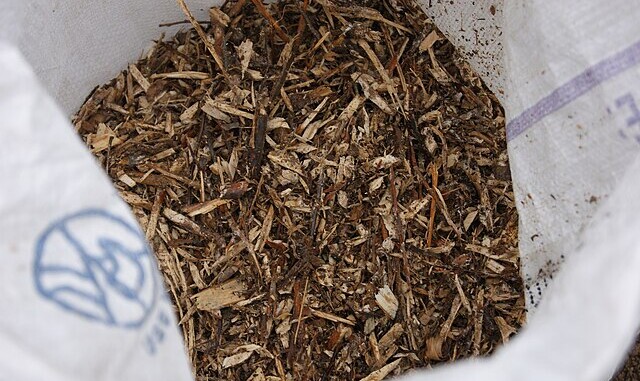

Let’s talk about mulch. Mulch has become this buzz word. You may see people pointing to woodchips and calling it mulch— are they right? Is that what mulch is? Let’s start from the beginning.
What exactly is mulch?
Mulch is something that covers the soil. That’s it. Let’s venture into nature and think about the forest; the ground of the forest is soft when you walk on it, and you also can’t see the soil. The soil is covered by leaves, pieces of branches, pinecones, and many other small little pieces of nature. In a garden we try to replicate that by covering the top of the soil with woodchips that are small little pieces of wood. Compost and bark can also be mulch, and even shredded plastic works too, although I strongly discourage you from using that. You may ask, what about pebbles? Yes, small rocks are considered mulch.
So now which mulch should you use?
I personally love woodchips, and maybe that comes from the fact that I grew up in the forest area of Poland, but who knows. Woodchips are natural, look good, and you can get them for free. Tree trimming companies are happy to drop off woodchips at your house, and you can set that up through ChipDrop. But be warned, it will be a large load so you will be sharing it with neighbors. There is no problem giving those away, people want them. You could also get mulch at nurseries in bags or even buy them in a scoop and load it into your truck. Los Angeles also has free mulch spots around the county where you can grab beautiful woodchips in small and huge amounts.
Compost is great to use in a veggie garden before new plants go in. I do not use woodchips in my veggie beds because mixing woodchips with soil creates the possibility of fungus. Don’t get me wrong, fungus is good in small amounts, but can quickly become a problem. Therefore I cover my veggie beds with compost that works like a blanket to cover the soil. There is even a technique called ‘no tilt gardening,’ which uses cardboard and then compost before planting. It is a wonderful low maintenance technique with little work that gets very good results. To go more in depth, no tilt means no turning of the soil, since you’ll kill good and bad organisms and the whole system of soil in the process. I also suggest that when adding nutrients to your soil, put the mulch on top of the soil rather than mixing it in to avoid disrupting the soil structures.
Sometimes gardeners cover their veggies beds with straw as well, which is another type of mulch. You just have to find straw that is organically grown, especially if you are using it for a veggie garden.
Shredded plastic was at one point popular, but I would not recommend using that at all. I think that we have enough plastic in the world, we definitely don’t need to put any more into our gardens. Small rocks and pebbles can look very pretty in your garden, especially if you have a succulent garden. They are more for aesthetics than anything else.
Now, how about leaves? Yes, leaves are fantastic. There is no reason to put leaves in the green bin, rather they should be in your garden beds. They are full of nutrients that will get released into soil. Avocado leaves, for example, should be left under the tree for that reason. The same thing goes for flowers; boguvillia, which a lot of us have, sheds off pretty pink flowers that create very attractive mulch.
I also mentioned bark, which you can find in many sizes as well as in your local nursery. Bark really takes time to decompose, so you do not have to replenish it as much as you would with woodchips. You will often find bark that comes from pine trees; there is a garden myth that pine trees lower the pH of the soil, but the effects are minimal (if any). The same goes for pine needles, which are a great way to mulch your garden. Plus they are free!
Why even bother to mulch?
Mulch has a lot of benefits. First it looks good, and I’m pretty sure we all want our gardens to look good. There are so many gardens where the mulch of any kind gets blown away by garden blowers, leaving behind unattractive bare dirt, so I would encourage you to ask your gardener to stop doing that. The garden looks more healthy and tidy in an organic and natural manner.
Secondly, the mulch slowly decomposes, and becomes organic matter. This is why every so often you need a new layer of mulch. The mulch of any type slowly decomposes, becoming smaller and turning into a healthy living soil full of nutrients. I have turned soil that was covered by cement for decades into a healthy veggie garden with the use of mulch, and it did not take me long to achieve that. The mulch that I cover my garden paths in my vegetable garden created beautiful soil where a lot of vegetables are reseeding without my involvement.
Third, mulch holds moisture in the soil. I experimented with that, and noticed that with mulch, I cut down on water usage significantly. Let’s get back to the forest: if you stick your hand under the mulch, the layer underneath is wet. The mulch allows the soil to keep the moisture in for a much longer time.
Additionally, mulch helps in leveling temperatures so the plant does not get affected when the temperatures rise.
Lastly, mulch helps with preventing weeds from growing, and there is no better reason to cover your yard with mulch than to limit the weeds. But remember, you will still get weeds, it will just be much less and they will be much easier to remove.
In conclusion, mulch is a lot of things. You have a lot of choices and it benefits your garden in a lot of ways. So please, stop raking your leaves, needles, and flowers of bougainvillea and just let nature do its thing. And if you do not have much of your natural mulch, there is plenty to buy or get for free.
Happy Gardening and mulching!
Joanna Kotwis
Photo credit – C. Marcos, Wikimedia Commons
