
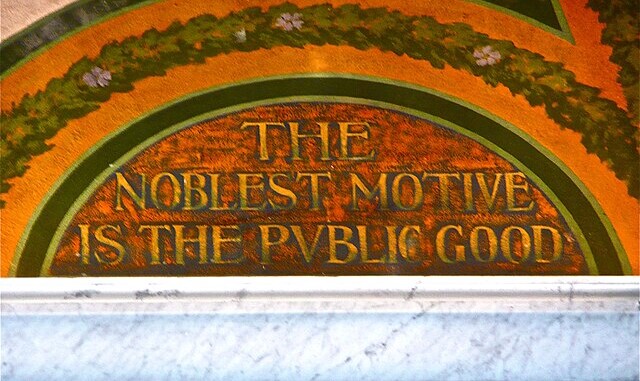

The uncomfortable silence of people who could speak but choose not to is not simply a local issue, but a national, and international one, just written smaller to fit on our stage.
The Academy Award winner for Best Documentary, ‘Mr. Nobody Against Putin’ was accepted with a speech that warned against the “countless small acts of complicity …When we don’t say anything when oligarchs take over the media and control how we can produce it and consume it.”
While financial hegemony took over our local news decades ago, the fact that this news outlet still exists give us the chance to be independent. But not a lot of people feel comfortable taking that chance.
A news story a few years ago – it sprouted several Letters to the Editor – was unable to grow into journalism, because no one would speak on the record. So I set it aside, knowing that all the characters in the story would be back.
Because it’s an election year, characters were back.
Someone I had asked about the matter months ago told me they had relevant information. They had emails, they had direct quotations from one of the major characters in the story – let’s call him the anti-hero – and they were going to give me the facts I needed to bring this up from storage and commit journalism.
Then, they folded. “Don’t use my name,” because someone might be offended. That became another re-write, and when that was done, a second communication,”Please leave my organization out of it.” Now there’s no story at all.
We are talking about the very small potatoes of municipal politics. But people were scared.
It’s pointless to be angry at people for being scared. People feel how they feel. But this comes into the category of ‘obeying in advance.’ If you are afraid someone is going to be mad at you for revealing their unethical behavior, you are probably right. But silence does not keep you safe. It gives anti-heroes permission to continue to be unethical.
So, back to work. I call someone about an agenda item coming up – could they comment? “Happy to talk to you, but not on the record.” (Sigh)
Finally, someone I’m talking to at a party offers that they are uncomfortable with the way the city communicates on a certain issue. I say that could certainly be a letter to the editor; they could express their thoughts without taking it directly to the city. Their response was that their business was dependent on the good will of the community, and any critique of municipal operations would not be coming from them. “I’m not going to be the one to write that letter.”
When people feel it’s more important to be nice than to be good, we are politely cooperating in our own oppression.
In these harrowing times, self-protection is required. But what is it about asking local leaders to simply be honest and ethical that is somehow perceived as – rude? Reckless? Radical?
While many of us seethe and swear in private over our cowardly congress, aren’t we behaving in the same fashion? When someone says “I’m not going to be the one to stick my neck out,” they are allowing unethical behavior to flourish unchecked.
Perversely, some of the people who are acting in an unethical fashion are outspoken critics of the federal administration, posting on social media about the rule of law. If it’s not okay to be an unethical republican, it’s not okay to be an unethical democrat or independent.
In Timothy Snyder’s book “On Tyranny,” he notes that authoritarians get most of their power without even having to demand it; people obey in advance, trying to make themselves agreeable t0 prevent being challenged.
There’s a difference between being nice and being good.
Judith Martin-Straw
