
What is a drought tolerant garden? In California we have an unusual climate. Our plant zone (which is a standard that lets gardeners know what plants will and won’t thrive) in Culver City is 10b. Most people think we are in the desert, but the truth is we are in a Mediterranean climate. We have two growing seasons and a ton of sun and limited rain. For that reason, our reliance on water promotes planting drought tolerant gardens. But what exactly are drought tolerant plants, and are they actually low maintenance?
For starters, drought tolerant means that those plants do not need a lot of water to survive. They fall in two categories: natives and non natives. Plants that are native to California normally have small, often gray leaves that reflect the sun. This way they do not burn in the summer sun—a very clever design if you ask me. Additionally, they need regular watering (best done by hand) for the first year. After that, they won’t need any watering and will rely solely on rainwater. However, some gardeners do water them after they are established, especially in summer during heatwaves or if they have them in pots. They often go dormant during the summer, but only a portion of them. Their leaves will shrivel and they will hold off on growing, but they’ll bounce back once the weather cools down. Others like toyon or manzanita shine on with green leaves through the summer.
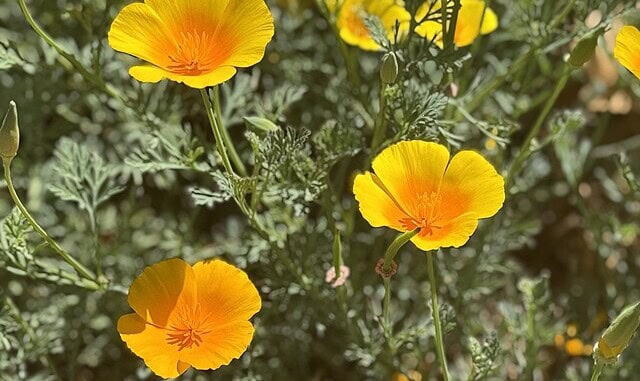
So, you have plenty of natives to choose that will look good all year long. You could mix them with those that go dormant, so there’s constantly something growing. Many natives help in stopping wildfires and erosion. There are specific natives that are fire resistant, such as native sages and California lilacs that are great to create a buffer around your house. Plus, the roots grow very deep since they’re looking for water, so they are great for slopes. The deep roots (which goes for all natives, not just the ones mentioned) also prevent erosion by keeping the soil in place. Examples of California natives are California poppies and buckwheat, southern bush monkeyflower, arroyo and golden lupine, white yarrow, and white sage. Because these plants are native to California, they are fantastic for the eco system, meaning your garden will be full of birds and insects.
The non native drought tolerant plants are not native to California, but do well growing with limited water. They come from other climates similar to California, which is why they thrive here. For example, if you went on a vacation to Spain you’d recognize many of the same plants that you see here. These plants do well in drip systems and are easy to find in a nursery. Examples of non native drought tolerant plants are most succulents, lavender, lantana, bougainvillea, and coneflower. Most do not go dormant, but some of them (this varies on what plant) take a break from blooming. They also attract insects and birds, although in much limited varieties and amounts. But when planting them you should avoid planting plants that are invasive to California, such as ice plant that you’ll often see growing on the beach. English Ivy is another plant to be avoided. The problem with invasive plants is that they easily reseed or spread and stop native plants from growing. Some like Eucalyptus trees are also very flammable.
If you want both types of drought tolerant plants in your garden, it is best to have natives on a separate watering system, to avoid overwatering. Additionally, if you want to have fruits and veggies they need more water than drought tolerant plants, so those should also be on a separate system.
Now that you know the difference between drought tolerant plants and natives, go out there and plant some. The best time to plant is fall and winter when temperatures are cooler and the rainy season is on the way. This is especially true for native plants. With drought tolerant plants, you can plant until May. Avoid planting from June to September—the plant will grow but it will likely struggle, and it is not fun to see a struggling plant.
Drought tolerant plants are low maintenance. The most important thing is to have a good setup and read the labels, since they often provide insight into a plant’s needs. A lot of plants get big, so you want to make sure you have room for them. Once you’ve got your garden going, grab a chair and enjoy the eco system that visits your garden.
Happy Gardening!
Best nursery near Culver City to find natives is:
C&S Nursery. 3615 Hauser Blvd. LA
Other great nurseries with drought tolerant plants are:
Orta Garden Supply 3848 Sepulveda Blvd, CC
VN Nursery 3954 Sepulveda Blvd, CC
Flora Grubb Garden Plant Nursery 13198 Minando Way, Marina del Rey
Hernández Nursery 5501 Obama Blvd, LA
Rolling Greens, 9528 Jefferson Blvd. CC
Joanna Kotwis
