
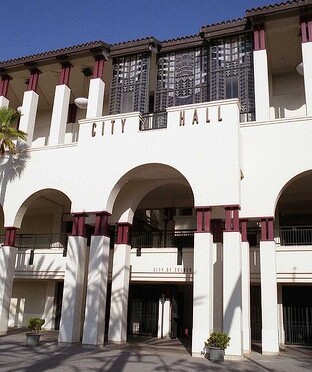

The City Council’s Special Strategic Planning Meeting on Saturday, Feb. 14, 2026 included discussions on the potential formation of a Joint Powers Authority (JPA) that could issue bonds, with the funds to be used for city projects.
Mayor Freddy Puza noted that he liked the idea, saying “This could be a great way to free us up, and put some money back into reserves…but what would be the risks? What are the benefits?”
When the state of California dissolved the Redevelopment Agency in 2011, it ended a source of funding that Culver City had relied on for decades. The state’s redevelopment statute required agencies to use 20% of the revenue for affordable housing, a mandate that generated more than one billion a year. But Culver City was one of the many California cities that used the funds to support commercial development, and did not create the required housing.
The national financial crisis that began in 2009 had Sacramento decide to close the program. While there have been attempts to strategize a way to create that kind of revenue for the city, the state has not been forthcoming.
City Manager Odis Jones began “We talked about making sure we can [improve] our risk assesment… we looked at several mechanisms to do that. [Mayor Puza and I] discussed several options. [Assistant City Manager] Lisa Sohgor and I talked about managing payments…in a way that would preserve our general fund.”
The option of Joint Powers Bonds was presented as a way to solve a number of the city’s financial challenges.
Consultant Jade Turner-Bond of Orrick, Harrington and Suttcliffe, LLP, made a presentation to the meeting that was was detailed and informative. The Joint Powers Bonds, which the city could issue without voter approval, would be a form of funding for the municipality that would allow it to sell bonds directly. There would need to be an appointed board to oversee the funds, and regular reports made to the council. Jones noted the council would have to decide on the specific details.
Turner-Bond, who offered that she had worked in both government and private sector financial programs, so “I have a view that’s really a ‘both-sides’ perspective.” She noted that Lease Revenue Bonds had been used by the City of Los Angeles going back to the 1960’s. “It’s really very common.” She offered that many cities use this as a way to fund infrastructure projects, and cited several projects in Los Angeles that she had worked with.
Jones stated that “Having members of the community, and business owners, involved in the [JPA] could be a great opportunity to infuse community engagement and involvement.”
If the decision is made to create the authority, the bonds could be used for affordable housing, for the Parks plan, and other currently unfunded or underfunded city projects.
Judith Martin-Straw
